
Meet Walter.
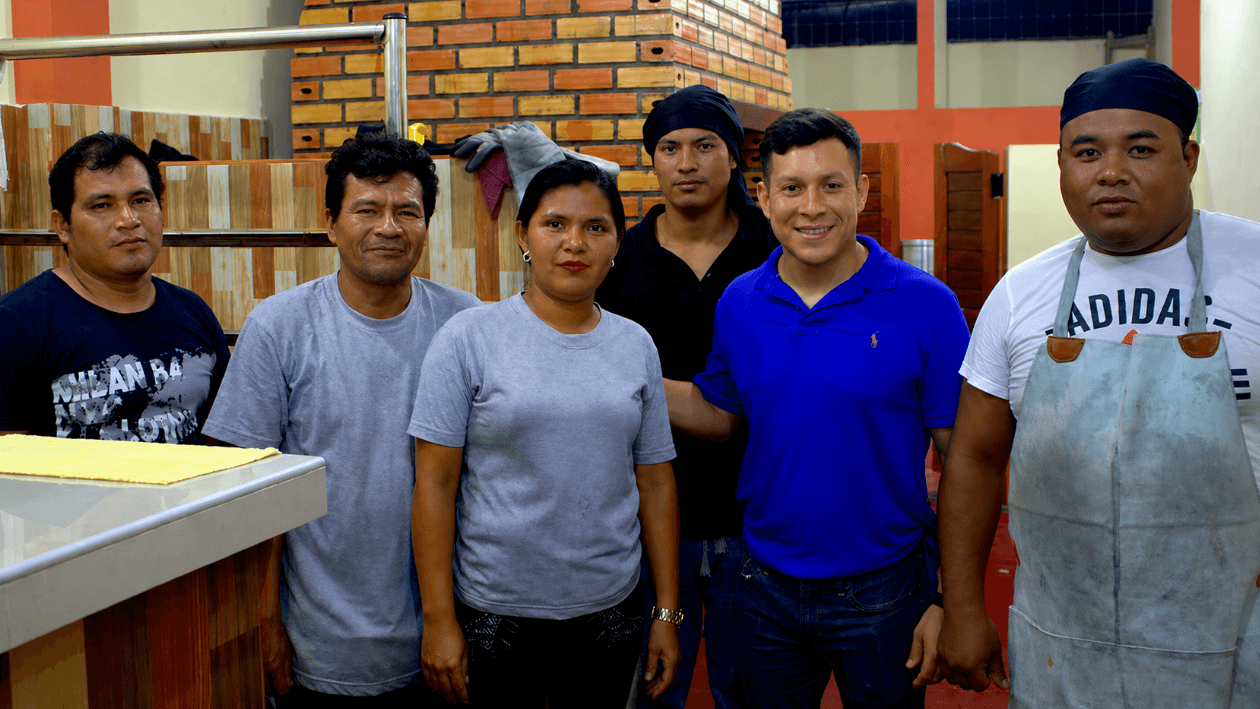
Walter Del Castillo is from Iquitos, in the Peruvian Amazon. He spent eight years running his own rotisserie there — working from a recipe his grandmother passed down, the way her mother passed it to her. Charcoal, time, patience, hands. Nothing you can buy in a box.
When Walter and his family moved to Maryland, he came to me — his brother-in-law — with a five-year plan to open a place stateside. I asked one question: why wait that long?So we’re not waiting. Walter brings the craft. I bring the operations. Together we built Papa Brasa.
His hands are on every bird.
It starts with the fire.
Pollo a la brasa is Peruvian, and it’s specific. It’s whole chickens marinated overnight, skewered, and rotated slowly over real hardwood charcoal. The drippings hit the coals, the smoke finds the skin, and forty-five minutes later you get a bird that tastes like nothing that ever came out of a gas oven.
There are shortcuts. Gas burners under fake charcoal chips. Smoke pumped in from a separate box. Plenty of chains do it. We don’t. The whole point is the fire, and the fire is charcoal. That’s the only version worth serving.
The sauce is the argument.
Every Peruvian household has its own aji verde, and every family swears theirs is the one. Ours is blended in-house every morning — cilantro, jalapeño, garlic, a little lime, a couple of things we’ll keep to ourselves. Cool, green, creamy, a little bright. If you’ve never had it with charcoal chicken, fair warning: you’re about to stop using anything else.
The neighborhood.
We’re opening in Maryland — in a spot that’s been hungry for a real pollería for a long time. Pickup-friendly. Counter seats so you can watch the rotisserie turn. Open for lunch, dinner, and the late Friday crowd. Staff who speak both English and Spanish, because everyone gets the same welcome.
It’s a family business. A small one. We’ll know the regulars by name before month three.
What our name means.
Brasais Spanish for the glowing ember left after the flame — the patient heat that actually cooks the chicken. Flame is the show. Ember is the craft. We picked the name to be both authentic to the Latin community and easy to say in English, because we serve everyone.
The promise.
Season it like we mean it. Fire it over real charcoal. Serve it fresh, generously, without attitude.
Season. Fire. Enjoy.
Opening summer 2026.
Get on the list and we’ll send you the first-day menu before anyone else sees it.
Notify me